Image 01
3D PCB Preview
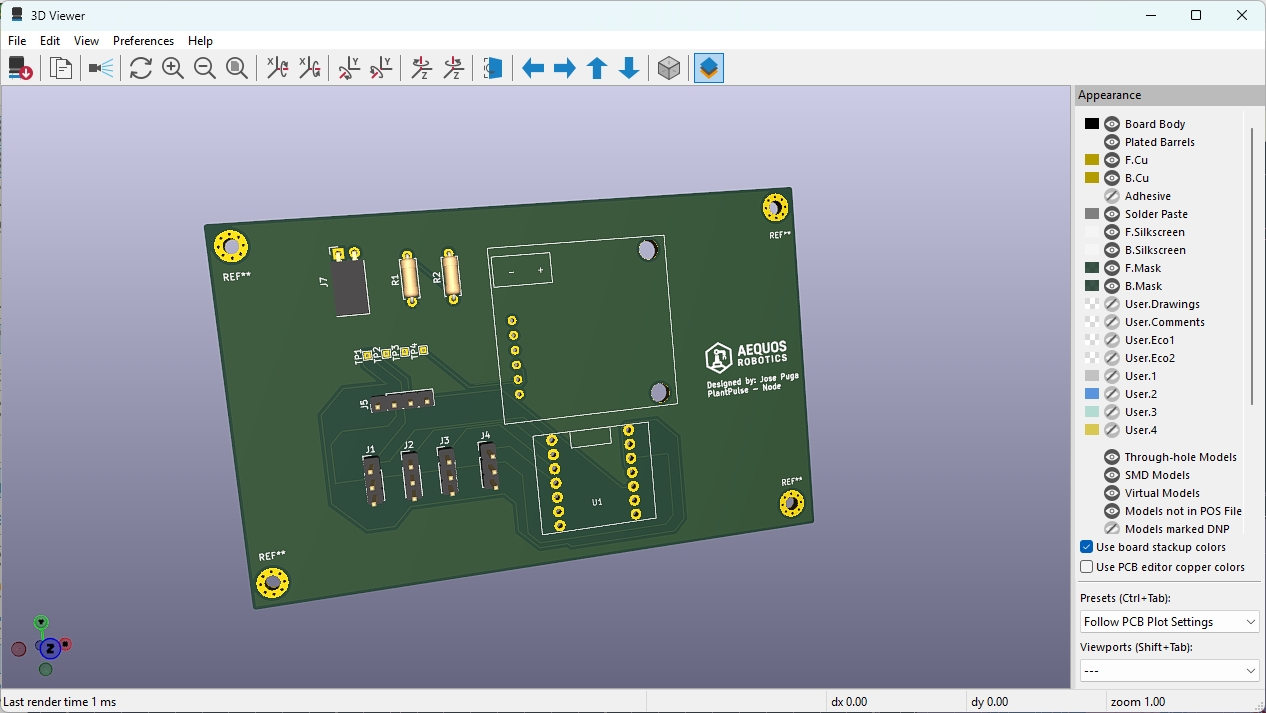
3D PCB preview showing the board outline, component placement, connector orientation, and the overall electronics packaging concept for the plant-monitoring control node.
PCB Design / Embedded Systems / Automation
A compact embedded plant-monitoring system integrating sensor feedback, PCB design, power regulation, and automated control logic.
PCB Design Documentation
A three-part hardware documentation set showing the 3D PCB preview, electrical schematic, and routed PCB layout with power and ground polygon pours.
3D PCB preview showing the board outline, component placement, connector orientation, and the overall electronics packaging concept for the plant-monitoring control node.
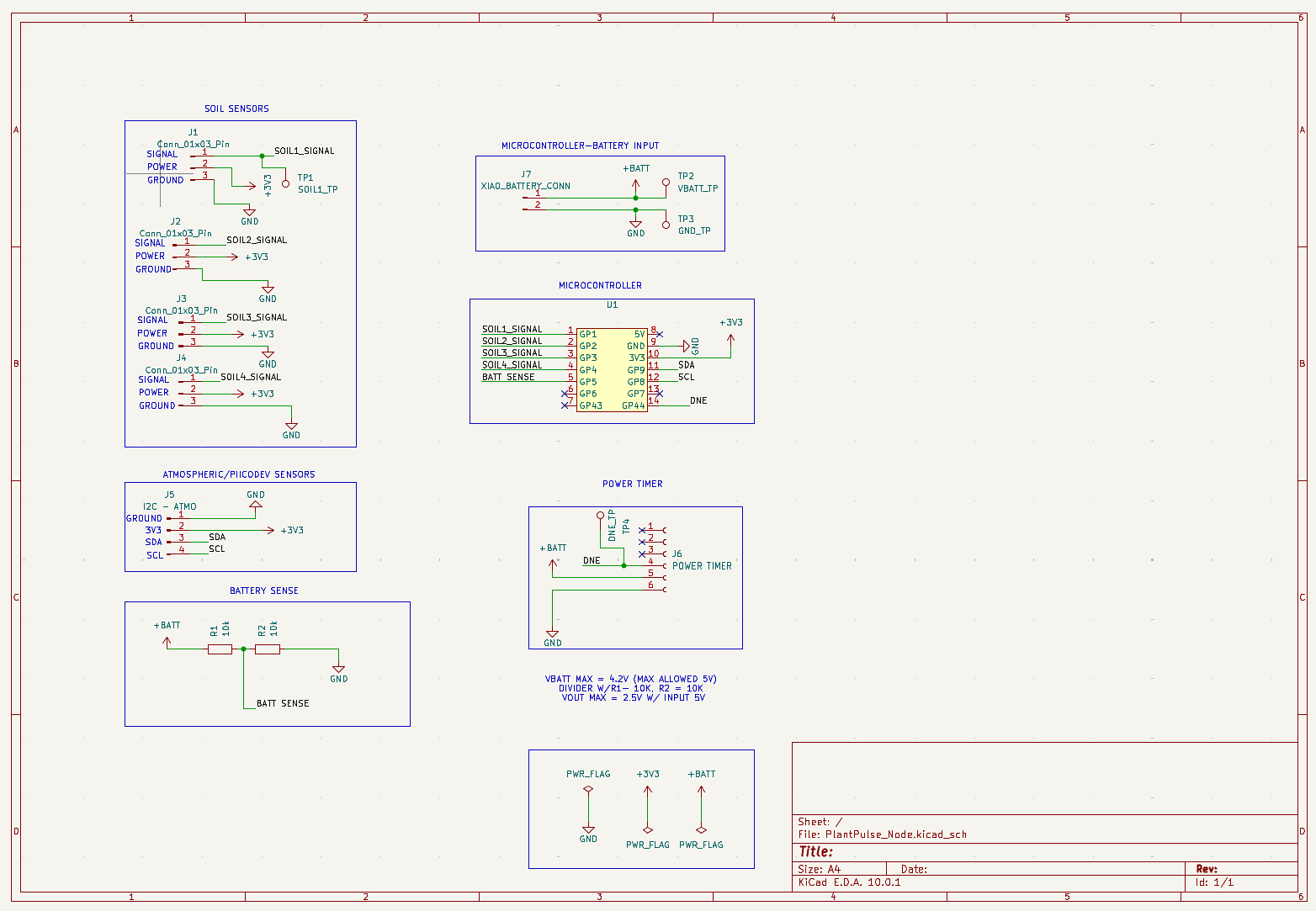
Electrical schematic defining the microcontroller connections, sensor inputs, power regulation, header connections, and signal routing used by the embedded system.
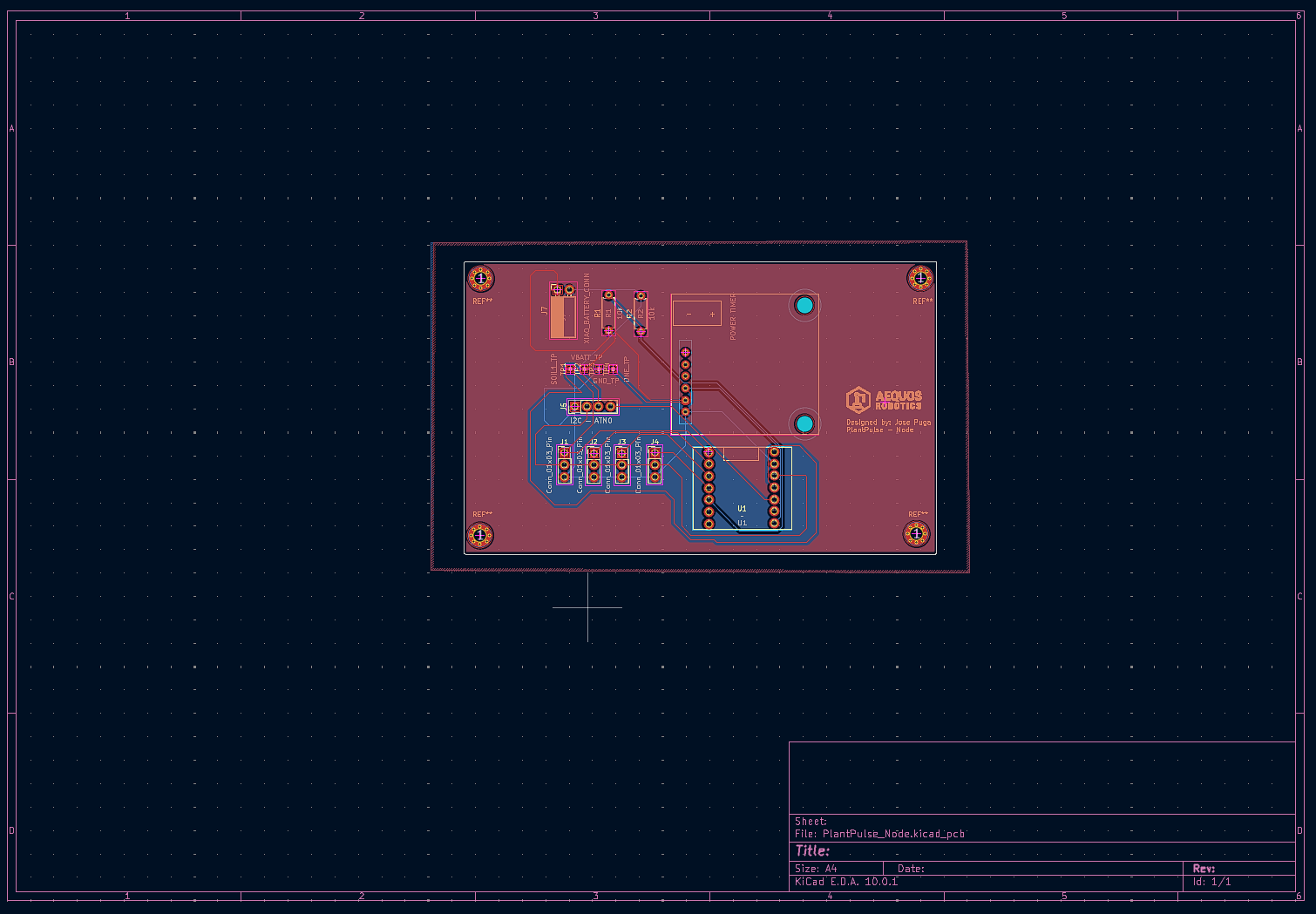
Routed PCB layout showing component footprints, trace routing, mounting locations, and copper polygon pours used for ground and power distribution.
PlantNode-Aquous is an embedded plant-monitoring and automation system designed to measure environmental conditions and respond through controlled hardware outputs. The project integrates sensor input, microcontroller logic, power regulation, and PCB layout into a compact mechatronics platform.
The design focuses on system-level integration across electronics, firmware, packaging, and practical testing. The purpose of the project was to create a functional control node capable of reading plant-care conditions and supporting automated watering or feedback control.
Embedded systems, PCB design, sensor integration, and automation.
KiCAD, Arduino/C++, SolidWorks, soldering, circuit debugging, and prototyping.
Compact electronics packaging, environmental sensing, and control logic.
PlantNode-Aquous Firmware Preview